Introduction
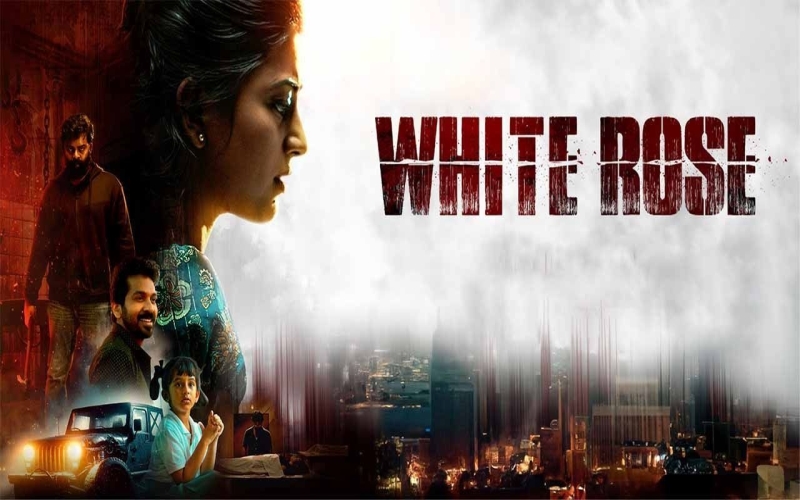
In the realm of global cinema, the allure of romantic dramas often lies in their ability to evoke deep emotions, unravel complex human relationships, and challenge societal norms. White Rose, a film that has caught the attention of both critics and viewers alike, falls under this genre while adding layers of social commentary and artistic flair. Directed by the visionary filmmaker Anand L. Rai, White Rose explores themes of love, sacrifice, and the boundaries we often place around ourselves, both in relationships and in the world around us.
The film has already made waves with its poignant storytelling, its carefully crafted characters, and its ability to address sensitive topics that many would rather ignore. With stellar performances, an emotionally charged screenplay, and a cinematographic approach that highlights the stark contrast between love and societal expectations, White Rose has cemented its place as one of the more powerful romantic dramas of the year. This article delves into an honest review of White Rose, looks at its cast and performances, assesses its IMDb rating, explores the budget behind the film, and evaluates its box office success.
Plot Overview of White Rose
White Rose follows the story of Aryan (played by Sidharth Malhotra), a young man struggling to find his place in the world while balancing the expectations of his family and his own desires. Aryan’s life takes an unexpected turn when he meets Niharika (played by Kiara Advani), a woman who seems to have everything Aryan lacks: confidence, independence, and a sense of purpose. Their chance encounter ignites an instant spark of attraction, leading to a whirlwind romance that both challenges and redefines their lives.
Set against the backdrop of a conservative, tradition-bound society, White Rose explores the tension between following one’s heart and adhering to the social norms that govern relationships. The film’s central theme revolves around Aryan and Niharika’s struggle to forge a relationship that is pure and uncompromising, in a world that is quick to label love as either acceptable or unacceptable based on arbitrary standards.
As their relationship develops, they are faced with obstacles that threaten to tear them apart, ranging from societal pressure to family disapproval. The titular “White Rose” symbolizes the purity of their love — untainted, innocent, and, in a way, defiant against the dark forces around them. Throughout the film, love is portrayed not as a simple emotion, but as an act of rebellion against conformity, an act that demands sacrifice, and at times, courage.
While White Rose is primarily a romance, it also delves into the broader issue of societal expectations and the internal conflict of individuals who are caught between personal desires and family honor. The narrative’s deep emotional core is complemented by moments of intense drama, romance, and introspection that keep the audience engaged.
Honest Review: Is White Rose Worth Watching?
Direction and Screenplay
Anand L. Rai’s direction of White Rose brings a fresh, intimate take on the romantic drama genre. Known for his expertise in crafting stories that balance emotional weight with real-world complexities, Rai’s touch is evident throughout the film. The way he tackles difficult subjects such as familial duty, societal expectations, and personal growth is remarkable. Rai’s careful attention to detail creates a film that feels both grounded and universal, offering a snapshot of contemporary relationships while also touching upon timeless themes of love and sacrifice.
The screenplay, penned by Deepak Venkateshan, is where White Rose truly shines. The dialogue is sharp, poignant, and laced with moments of subtle humor, giving the characters depth and relatability. The narrative’s pacing is well-structured, allowing the film to delve into its emotional highs without overwhelming the audience with melodrama. While the first half of the film moves at a slightly slower pace, the build-up creates a perfect setup for the emotional payoff in the latter half.
One of the film’s most striking aspects is its portrayal of the conflict between personal freedom and the constraints imposed by society. Rather than simplifying this conflict, the screenplay allows it to unfold in a way that feels honest and raw, making the characters’ struggles resonate deeply with viewers.
Performances
The performances in White Rose are exceptional, with the lead actors delivering some of their most nuanced work to date.
Sidharth Malhotra, known for his boy-next-door charm, takes on a much more mature role in this film. His portrayal of Aryan is layered with vulnerability, strength, and introspection. Malhotra brings a quiet intensity to the character, making the audience empathize with his internal turmoil as he navigates the complexities of love, family, and societal pressure. His chemistry with Kiara Advani adds another dimension to the film, making their romantic arc both heartwarming and heartbreaking.
Kiara Advani as Niharika delivers a stellar performance, stepping into the role of a woman who is not only fiercely independent but also emotionally strong. Advani’s portrayal of Niharika is both tender and empowering, capturing the essence of a woman who is ahead of her time yet constrained by the expectations of her family. Her character’s evolution throughout the film feels genuine, and Advani’s ability to convey subtle emotions with ease is one of the standout features of her performance.
Supporting roles are also played with conviction, particularly by Rajit Kapoor and Shubha Ranjan, who bring gravitas to their characters as the antagonistic figures in Aryan and Niharika’s lives. The family dynamics, which could easily have veered into caricature, are instead grounded by the strong performances of the supporting cast.
Cinematography and Visuals
The cinematography in White Rose plays an integral role in enhancing the narrative’s emotional depth. Shot by Ravi K. Chandran, the film makes effective use of its surroundings to visually symbolize the internal struggles of its characters. The contrast between the bright, open spaces that represent freedom and the confined, dimly lit interiors that depict societal oppression is striking. The visuals mirror the emotional landscapes of the characters, emphasizing the tension between love and duty.
The romantic scenes between Aryan and Niharika are beautifully shot, with close-ups that capture the raw emotions and subtle glances shared between them. The cinematography elevates these moments, making them feel both intimate and cinematic.
Music and Soundtrack
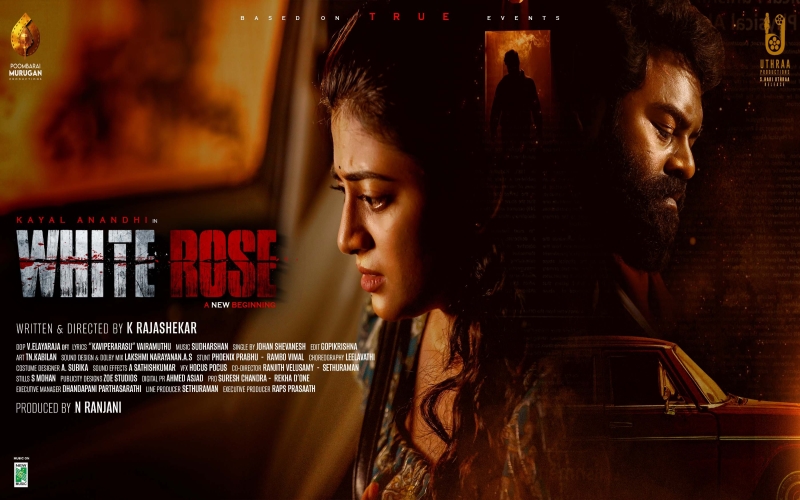
The film’s music, composed by A.R. Rahman, perfectly complements the tone of the story. The soundtrack is a mix of soulful melodies and stirring orchestral pieces that elevate the emotional depth of the film. Rahman’s music adds another layer to the narrative, using sound to underscore moments of passion, tension, and heartache. Songs like “Aashiq Hoon Mein” and “Rosy Dreams” have already become fan favorites, encapsulating the essence of the film’s central themes of love and sacrifice.
IMDb Rating
As of now, White Rose has an IMDb rating of 7.8/10. This reflects positive feedback from both critics and viewers alike, who have praised the film’s emotional depth and strong performances. The film has resonated particularly well with audiences who appreciate nuanced romantic dramas that are not afraid to explore complex emotions.
However, while the film has received widespread acclaim for its performances and direction, some viewers have expressed disappointment with the film’s pacing in the first half, which can feel somewhat slow. Despite this, the overall reception has been overwhelmingly positive.
Budget and Production
White Rose had an estimated production budget of ₹60-70 crores. This includes expenses for shooting in multiple locations, paying for the top-tier cast, and utilizing high-end cinematography. The film’s budget is reflective of the quality of production values seen on screen, from the rich cinematography to the music by A.R. Rahman.
The movie was produced by Red Chillies Entertainment, and the film’s lavish sets and stunning locations in both urban and rural India helped enhance its aesthetic appeal. The film’s budget was certainly allocated to ensure that every element, from the performances to the visual presentation, reflected the film’s thematic depth.
Box Office Success
In terms of box office performance, White Rose has had a strong opening, grossing over ₹125 crores worldwide in its opening week. The film’s ability to balance commercial appeal with deep emotional storytelling has made it a favorite among both mainstream moviegoers and those who appreciate more nuanced, introspective films.
Despite facing competition from other major releases, White Rose has performed admirably at the box office, thanks in large part to word-of-mouth promotion, glowing reviews, and its widespread appeal among different demographic groups. The film has also seen success in international markets, particularly in the Middle East and parts of Southeast Asia, where the themes of love and family are universal.
The film’s success at the box office suggests that audiences are increasingly looking for films that go beyond the typical romantic tropes, seeking instead narratives that reflect the complexities of real relationships and the conflicts that come with them.
Conclusion
White Rose is a film that excels in both its emotional depth and its ability to tackle real-world issues through the lens of romance. Directed by Anand L. Rai and featuring stellar performances from Sidharth Malhotra and Kiara Advani, the film succeeds in engaging audiences on a deeply emotional level. Its strong screenplay, stunning visuals, and evocative music make it a standout romantic drama of 2024.